

The Denver Broncos’ unbelievable comeback victory over the New York Giants will be remembered in the Mile High City for decades.
Who helped dig that 19-point hole, and who helped the Broncos dig out of it? Let’s look.
Stock Up
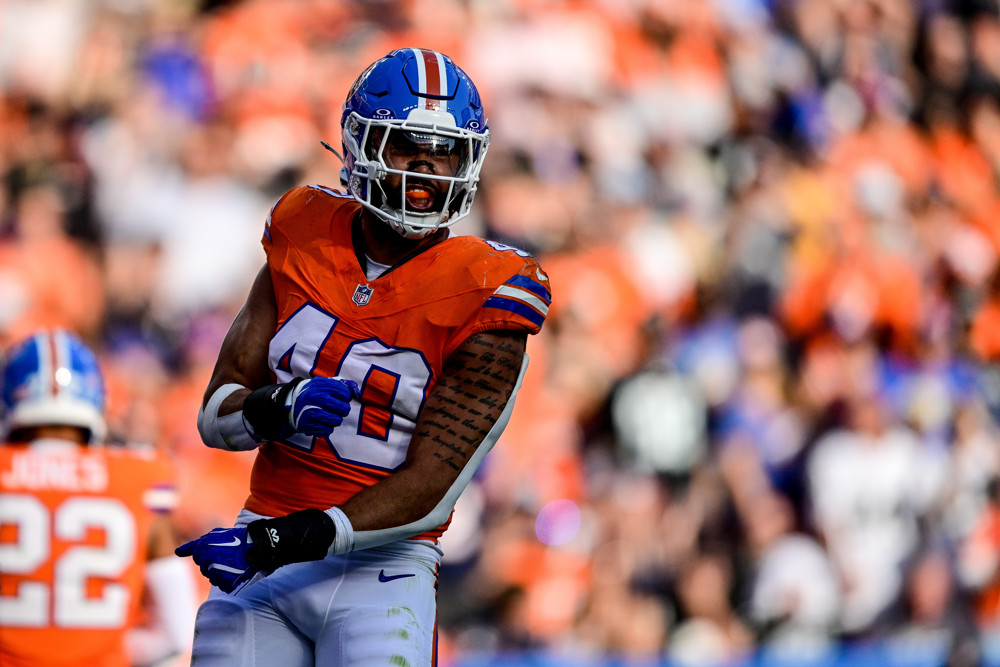
Justin Strnad & Dre Greenlaw
On a defense that has the potential to be the league’s very best, Alex Singleton has been a weekly Achilles Heel. Offenses are making it a point to regularly target him in the passing game, and he’s no longer the additive run defender he once was, as his diminished movement skills often prevent him from reaching his necessary landmarks.
For the first six weeks of the season, and this upcoming matchup with the Cowboys, the Broncos had no other option but to keep riding with Alex Singleton and Justin Strnad.
Now though, with Dre Greenlaw healthy and fully available starting in Week 9, Denver has options.
Considering Singleton is the tenured starter and was voted the team captain of the defense, the simple solution would be to install Greenlaw alongside him and return Strnad to the bench. Unfortunately, the tape suggests that a more complicated route is probably the right course of action.
So far this season, Singleton has been a sieve compared to Justin Strnad. He’s maybe slightly more reliable against the run, but with Greenlaw returning to the lineup, and Denver’s run defense playing so well, that’s not a deficiency that should force Joseph into starting Singleton. Meanwhile, Singleton’s inability to cover is such a glaring limitation that Joseph should seriously consider a change.
Singleton has been targeted 32 times in coverage this season, while Strnad has been targeted just eight times. Quarterbacks are posting a passer rating of 129.3, while Strnad has allowed a passer rating of just 79.2. For context, Drake Maye currently leads the league with a 116.4 passer rating, and Russell Wilson ranks 30th with a passer rating of 78.2.
Plus, as the cherry on top, Strnad made the game-changing interception this week, and the Broncos don’t win without that play. Beyond that, they don’t make that play if Singleton is in for Strnad.
While the Singleton vs. Strnad debate rages on, Dre Greenlaw only needed 21 snaps to cement himself as the team’s clear top linebacker. Over that paltry snap count, Greenlaw totaled six tackles, trailing only the aforementioned Singleton, with eight. Notably, Singleton played 56 more snaps than Greenlaw to attain those two extra tackles.
Greenlaw, unfortunately, sidelined himself for Week 8 by yelling at the head official after the conclusion of the Broncos’ win over the Giants, but his return to defense was still so inspiring that he has to be mentioned here.
Marvin Mims & Courtland Sutton
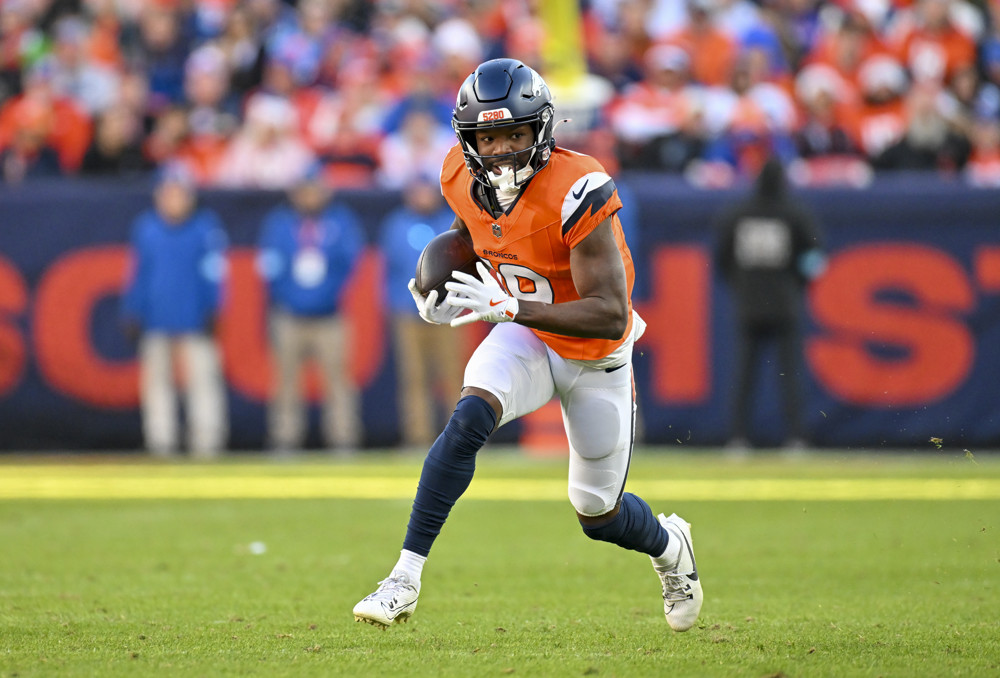
The most underrated storyline for the Denver Broncos this season has been Marvin Mims.
Last year, Marvin Mims was relegated to a primarily special-teams role for the first several games before he finally began to emerge as a gadget-play maestro down the stretch. While it was great to see the offensive staff find a way to create quality production from a weapon they invested a high pick in, it was a little concerning to see Mims largely limited to the slot and these one-off designer plays.
In 2025, Mims has proven there’s more to his game than just those flourishes. This year, he’s lined up out wide on 71.4% snaps, up from 50% in 2024. Meanwhile, he’s now lining up in the slot just 26.1% of the time, down from 36.4%. It’s not just alignment, but usage too, as Mims’ average depth of target has nearly doubled, from 7.3 yards to 13.3 yards, thanks to him seeing far fewer backfield targets.
Plus, he’s also making better plays now when he gets those targets, and, as a result, Bo Nix is trusting him more. Last year, Mims saw just four contested targets all season, and he managed to haul in just one of them. Through seven weeks of 2025, he’s seen four such targets, and he’s completed the catch three times.
Now, he’s far from a finished product, and his route tree still needs some real development, but these stats denote a legitimate step in the right direction that shouldn’t be overlooked.
Meanwhile, Courtland Sutton continued to cement his place in Broncos history. With 87 yards and a clutch catch to set Wil Lutz up to win the game for Denver, Sutton surpassed Riley Odoms for the seventh-most career receiving yards (5,809) in Broncos history.
Bo Nix

Broncos Country needs to become more comfortable with having a nuanced conversation about Bo Nix, considering his weighty contributions to the team’s constricted passing game.
That said, anytime you lead the greatest comeback in your franchise’s history and become the only quarterback in NFL history to score two passing and two rushing touchdowns in a game’s final quarter, you’re allowed a one-week reprieve from criticism.
In the fourth quarter, Nix picked apart a beleaguered New York Giants defense like a pack of ravenous wolves would a carcass. Outside of the deep connections to Mims and Sutton, there weren’t many downfield targets, but Nix didn’t need those plays to dissect the coverage and lead his team to victory.
Broncos’ Defensive Role Players (Malcolm Roach, Riley Moss & Que Robinson)
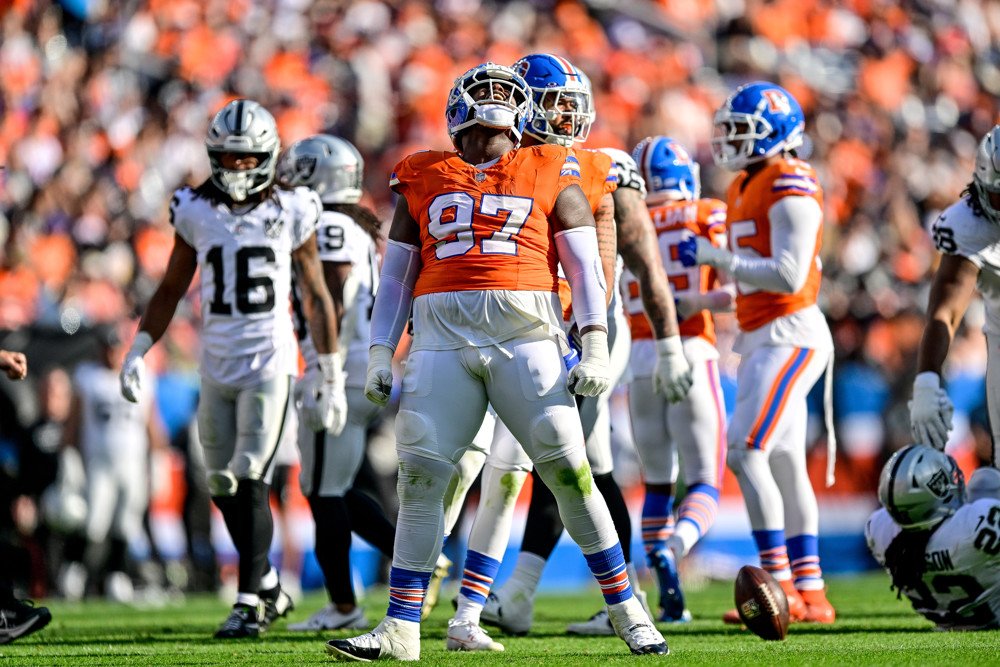
The stars of the Denver Broncos’ defense continue to produce. Jonathon Cooper and Nik Bonitto are among the league’s top-five sack artists, Zach Allen is still regularly imploding offenses, and Pat Surtain II remains the game’s best cornerback.
That said, it’s time to give some love to some of the defense’s less-heralded stars who are still making a tremendous impact.
First, Malcolm Roach has singlehandedly uplifted the Broncos’ run defense since returning to the lineup. Through the first five weeks of the season, Denver ranked 12th in rushing success rate allowed (37.9%), but since Roach has returned to the lineup, they rank sixth (34.5%), despite facing two of the league’s better rushing attacks with the Jets and Giants.
Next up, we have to heap some praise on Riley Moss for continuing to lockdown the side of the field opposite Pat Surtain II. When targeting Moss, quarterbacks are completing just 39.1 % of his passes, which is the lowest completion percentage allowed by any cornerback in the league.
Yes, Moss allows some big plays, but that has much more to do with the structure of the defense and how aggressive that defense is than anything to do with Moss. Vic Fangio wants to sit back and dare you to pick up four yards a play, every play, without making a single mistake. Vance Joseph, on the other hand, presses the issue, tries to force you into a mistake or a negative play, and as a result, can leave himself more vulnerable to those big plays. But, without that style of play, the Broncos wouldn’t be on pace to break the 1985 Bears’ all-time team sack record.
Finally, time to turn our focus to one of the newest contributors to Denver’s efforts towards breaking that record — Que Robinson.
Robinson was a healthy scratch for the first five weeks of the season, which was disappointing considering the general lack of contributions from the rookie class. But, with Jonah Elliss out the last two weeks with a shoulder injury, the ‘Bama rookie was finally activated and played remarkably well.
Over his two games of action, Robinson had 17 pass-rush opportunities, resulting in two pressures and 0.5 sacks. Now, that isn’t jaw-dropping, but notably, his per-snap pass-rush impact, as measured by PFF’s Pass Rush Productivity (PRP) score, is superior to Jonah Ellis’s this season. On top of that, Robinson totaled four run stops (defined as a tackle that results in negative offensive EPA), with three coming in the Giants game alone.
Stock Down
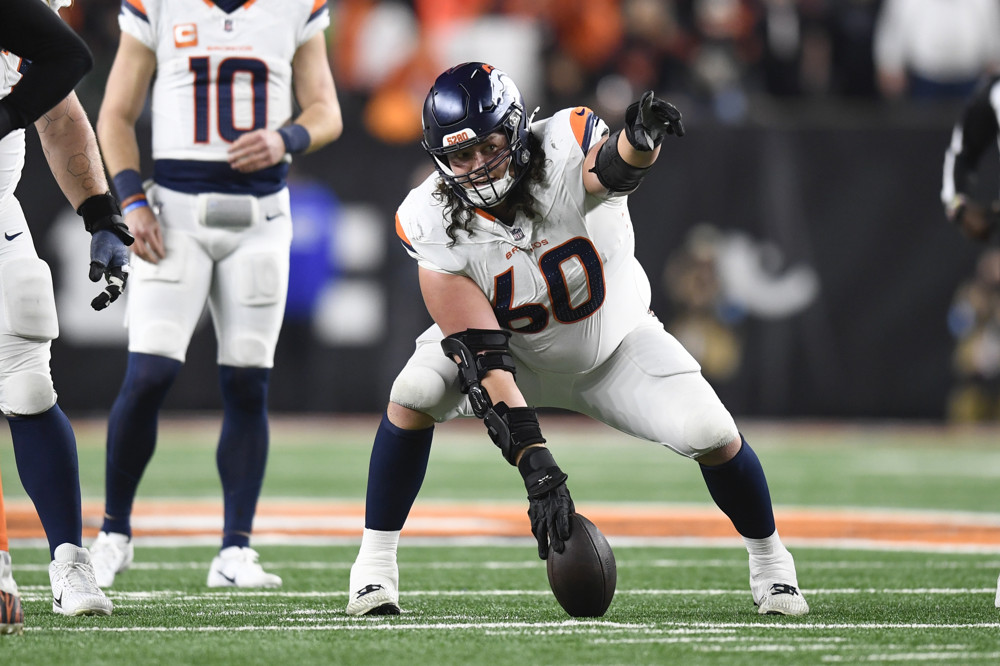
Luke Wattenberg
There are more glaring problems with the Denver Broncos, like those at quarterback and with the hyper-conservatism in the offense, but one could easily argue that no starter on Denver’s offense is playing worse, relative to their peers around the league, than Luke Wattenberg.
He’s a respectable pass-protector, and that does boast real value as Bo Nix continues to develop his ability to respond to pressure, but he regularly hurts the timing and rhythm of the passing game with errant snaps. Throughout the Broncos’ win over the Giants, Nix was forced to leave the ground with his arms fully outstretched above him numerous times, which in turn put Nix behind schedule when it was time to read out the play.
These snaps also upset the timing of the rushing attack, where Wattenberg is an even greater problem. Broncos fans often wonder why the rushing attack isn’t better, with a couple of promising young backs and a talented offensive line, and Wattenberg is the prime culprit for those disappointments.
It’s not often you see a team draft a center in the first round, but Denver has plenty of reasons to buck that trend come April.
Sean Payton
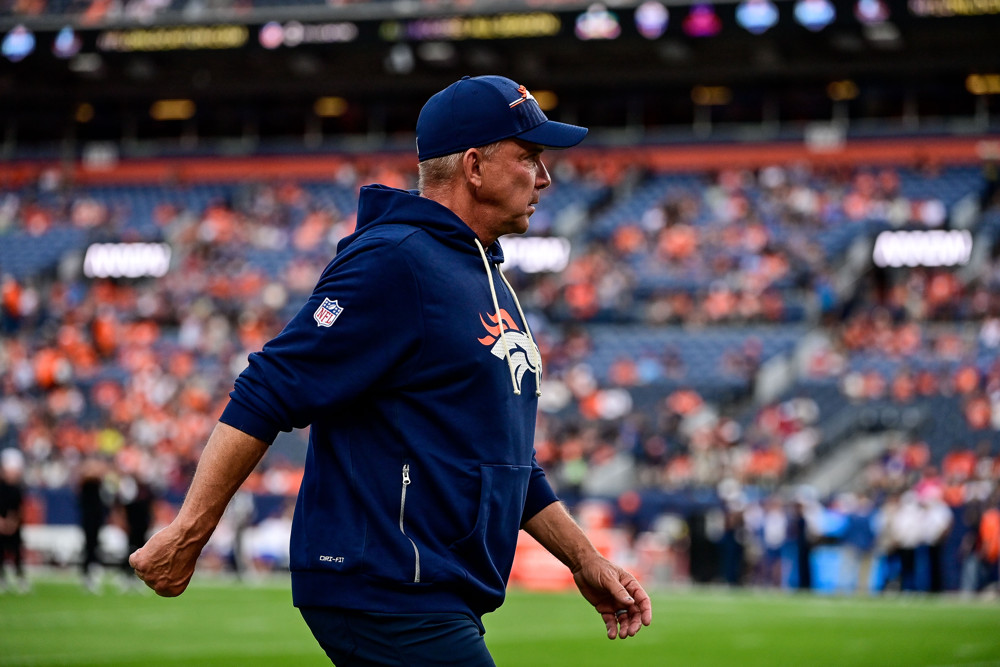
Initially, Sean Payton led this week’s Stock Down section because his inability to learn the obvious lesson from the Week 6 win over the Jets nearly cost the Broncos what should’ve been a relatively easy Week 7 win.
That said, Payton coached his ass off during the team’s fourth-quarter comeback, and any comeback of that historic magnitude requires quality coaching and a strong team culture. Playcalling is a significant factor in why Sean Payton is in the Mile High City, but it is far from his only responsibility as CEO of the team.
Now, as for the playcalling through the game’s first three quarters, it was wildly painful.
Through 45 minutes of game time, the offense suffocated itself with numerous screens to nowhere and neutered passing concepts. Now, it should be noted that, on the rare occasion the offense did show a dash of aggression, during the early stages of the game, Bo Nix rarely delivered. Unfortunately, Payton responded by having the passing attack retreat even further.
Finally, with the Broncos’ backs against the wall and no other option, the offense leaned into more true dropbacks, and Nix delivered, leading Denver back from a near-certain defeat.
That said, if Sean Payton wants to keep the winning streak alive this week with the Dallas Cowboys coming to town, he has to open up the passing attack. Denver will not out-score Dallas with this low-wattage assault.
